


How to Choose the Right SIP Trunking Provider for Your Business Phone System
Introduction
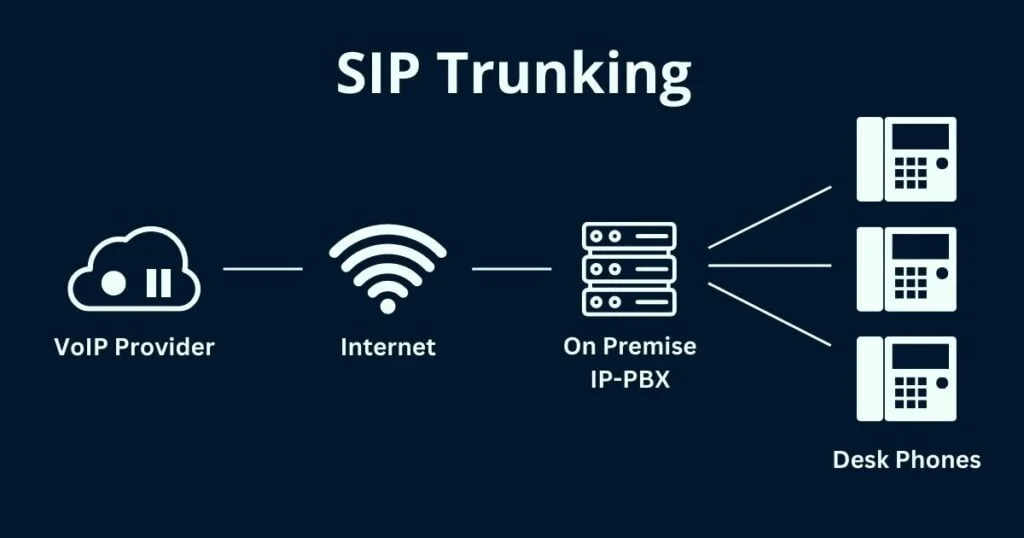
Choosing the right business SIP trunking phone systems provider is not something to rush into, since it affects call quality, reliability, and cost for your entire business. The right provider keeps your team connected without dropped calls or unexpected charges. This guide covers the key factors to check before signing a contract.
Step One: Check Call Quality and Network Reliability
Call quality depends heavily on the provider's network, not just your own internet connection. Ask potential providers about their uptime guarantees and how they prioritise voice traffic over other data. A provider that cannot explain how they maintain call quality during busy periods is a warning sign.
Step Two: Compare Pricing Structures
SIP trunking pricing usually includes a cost per channel and a cost per minute for calls, sometimes bundled with inclusive minutes. Compare these costs against your actual call patterns rather than a generic quote, since a business with mostly local calls will benefit from a different plan than one making frequent international calls.
Step Three: Check Compatibility With Your Existing System
Confirm whether the provider's SIP trunks are compatible with your current PBX or cloud phone platform. Some providers only support specific hardware brands, so this check can save you from an expensive and unnecessary equipment upgrade.
Provider Evaluation Checklist
|
Factor |
What to Check |
Why It Matters |
|
Call Quality |
Uptime guarantees and voice prioritisation |
Prevents dropped or unclear calls |
|
Pricing |
Per channel and per minute costs |
Keeps monthly spend predictable |
|
Compatibility |
Support for your current PBX or platform |
Avoids unnecessary hardware costs |
|
Failover Options |
Backup routing during outages |
Keeps the business reachable |
|
Support |
Response times for faults |
Speeds up issue resolution |
Step Four: Review Failover and Support Options
Ask what happens if your main internet connection fails. A good SIP trunking provider offers automatic failover to a mobile number or secondary line, keeping your business reachable during an outage. Also check what support is available outside normal office hours, particularly if your business takes calls outside a nine to five schedule.
Step Five: Read the Contract Terms Carefully
Look closely at contract length, early termination fees, and what happens to pricing once any introductory offer ends. Providers who are transparent about these details from the start are generally more reliable to work with over the long term.
Request a full written breakdown of costs rather than relying on a verbal quote, so you have something to refer back to if pricing changes unexpectedly once the contract is live.
Questions to Ask Before Signing a Contract
A short list of direct questions can prevent problems later. Ask what happens to pricing once any introductory discount ends, since some providers raise rates significantly after the first six or twelve months. Ask how quickly additional channels can be added if call volume grows faster than expected.
It is also worth asking how the provider handles number porting if you are moving from an existing telecoms supplier, and what the typical timeline looks like from signing to going live. Providers who answer these questions clearly and in writing tend to be the ones worth a longer term commitment.
Working with a Telecoms Consultant
For businesses without in house IT expertise, comparing SIP trunking providers from scratch can be time consuming and technical. Independent telecoms consultants review your current phone setup, benchmark providers against your actual call patterns, and negotiate pricing on your behalf, often uncovering savings that would be difficult to find without detailed market knowledge.
A good consultant will also flag any features you are paying for but not using, and can help plan a smoother migration if you decide to switch providers rather than simply renewing an existing contract out of habit. Firms such as Almens Consult offer this kind of independent guidance to UK businesses.
Conclusion
Choosing the right SIP trunking provider comes down to matching call quality, pricing, and support to how your business actually operates. Taking the time to check compatibility, failover options, and contract terms before signing, and asking the right questions along the way, helps ensure your phone system supports your business rather than becoming a source of ongoing problems.
Frequently Asked Questions
Should I choose the cheapest SIP trunking provider?
Not always. A slightly higher cost provider with better call quality and support often proves more reliable over time.
Can I switch SIP trunking providers later?
Yes, though it is worth checking contract terms first, since some providers charge early termination fees.
Do all SIP trunking providers support failover routing?
Most reputable providers do, but it is worth confirming this is included rather than assuming it as standard.
How long does it take to set up SIP trunking?
Setup times vary, but many providers can activate a SIP trunk within a few days once compatibility is confirmed.

 Arabic
 French
 Spanish
 Portuguese
 Deutsch
 Turkish
 Dutch
Dutch
 Italiano
 Russian
 Romaian
 Portuguese (Brazil)
 Greek
Greek