


Which Wound Dressing Should You Use? A Practical Guide to Common Dressing Types
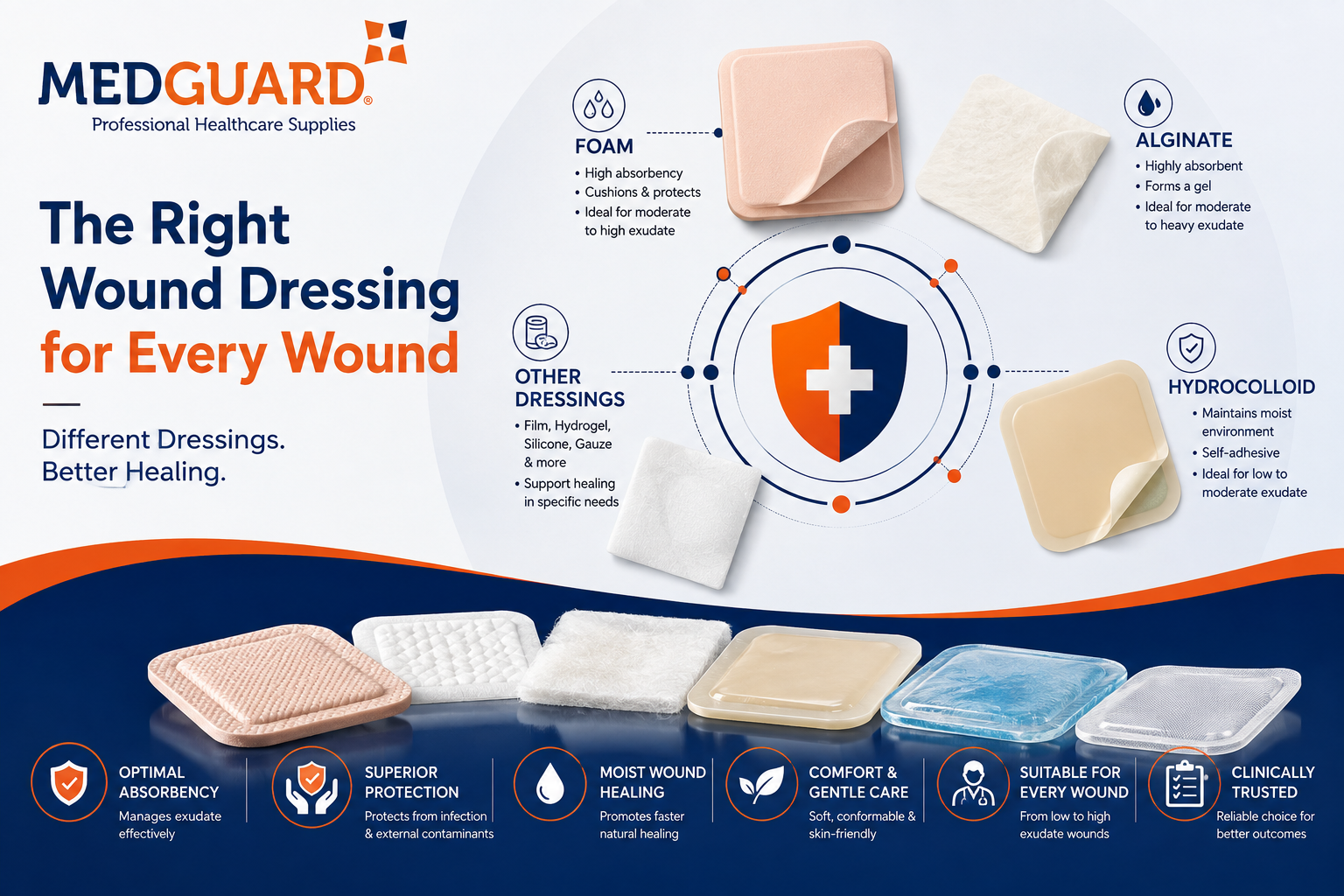
When it comes to wound care, choosing a dressing is not simply about picking the product with the highest absorbency or the most familiar name. Different wounds have different needs, and the right Wound Dressings should support the condition of the wound while protecting the surrounding skin.
For healthcare professionals, carers and people managing wound-care needs at home, understanding what common dressing types are designed to do can make product selection easier. The key is to match the dressing to the wound rather than choosing a product based on appearance alone.
Start With the Wound, Not the Dressing
Before considering a particular dressing, look at the characteristics of the wound. Is it dry, lightly exuding or producing a significant amount of fluid? Is the surrounding skin fragile? Is the wound superficial or deeper? Does it sit in an area that experiences frequent movement?
These questions can help narrow down the most appropriate options.
A dressing should ideally help manage the wound environment without causing unnecessary trauma during application or removal. Product instructions and clinical recommendations should always be followed.
When Might a Foam Dressing Be Suitable?
Foam dressings are often considered when managing wounds that produce moderate amounts of exudate. They can absorb wound fluid while providing a protective layer and, in some cases, cushioning.
Allevyn is a well-known example of a foam dressing range. Different Allevyn products are designed for different applications, so healthcare professionals should consider the individual product's features rather than treating the entire range as identical.
Foam can be a practical option where absorption and protection are both important considerations.
When Should You Consider Alginate Dressing?
An Alginate dressing has different properties from a conventional foam dressing. Made from seaweed-derived fibres, alginates absorb wound fluid and can form a gel when they come into contact with exudate.
This makes them useful for selected wounds producing moderate to heavy levels of fluid. They may also conform to irregular wound surfaces.
Because alginate dressings generally require a suitable secondary dressing, they are often used as part of a wider dressing system rather than as a standalone covering.
What About Hydrocolloid Dressings?
Hydrocolloid dressings interact with wound fluid and form a gel, helping maintain a moist wound environment. They may be considered for selected wounds with low to moderate exudate.
They can provide a protective covering and may be useful where a dressing that can remain in place for an appropriate period is desirable.
However, hydrocolloids are not suitable for every wound, particularly those producing heavy amounts of exudate.
When Are Hydrogels Useful?
Hydrogels are designed to provide moisture and may be considered for wounds that are dry or minimally exuding.
Rather than absorbing large quantities of fluid, their role is to support a moist environment where this is appropriate. This illustrates why choosing the most absorbent dressing is not always the correct approach.
Don't Forget the Surrounding Skin
The condition of the skin around a wound is just as important as the wound itself. Repeated exposure to moisture can cause the surrounding skin to become vulnerable, while aggressive adhesives can create problems for people with fragile skin.
Silicone contact dressings and other products designed for gentle removal may be considered when minimising trauma is important.
The dressing's adhesive properties, fixation method and removal requirements should all be considered before selection.
What If the Wound Produces Heavy Exudate?
For wounds producing substantial amounts of fluid, a dressing with greater absorption and fluid-retention capacity may be needed. Options can include highly absorbent foam, alginate, hydrofibre or superabsorbent dressings, depending on the wound.
The amount of exudate can also change over time. A dressing that was appropriate initially may need to be reviewed if the wound becomes wetter or drier.
Regular wound assessment is therefore important rather than relying on the same product indefinitely.
Making a Practical Choice
There is no universal “best” dressing. Foam may be useful for one exuding wound, while an Alginate dressing may be more appropriate for another. A hydrocolloid may suit a selected low-exuding wound, whereas a hydrogel could be considered where additional moisture is required.
The wound's characteristics, patient comfort, surrounding skin and product specifications should all contribute to the decision.
Finding Wound Care Products in Ireland
For healthcare professionals, carers and organisations looking for Medical Supplies In Ireland, having access to a broad selection of wound-care products can make it easier to meet different clinical requirements.
Medguard Healthcare supplies medical and healthcare products, including Wound Dressings for a range of applications. Understanding the differences between dressing categories can help healthcare professionals compare products and select options that correspond with individual wound-care needs.
Ultimately, the right dressing is the one that fits the requirements of the wound and the overall care plan. When there is uncertainty about wound assessment or dressing selection, guidance from a suitably qualified healthcare professional should be sought.
Original Source : https://www.mednuc.net/allevyn-dressing-vs-alginate-dressing-which-wound-dressing-is-used-when/

 Arabic
 French
 Spanish
 Portuguese
 Deutsch
 Turkish
 Dutch
Dutch
 Italiano
 Russian
 Romaian
 Portuguese (Brazil)
 Greek
Greek