


Which Patient Intake Software Is Best for Small Medical Practices?
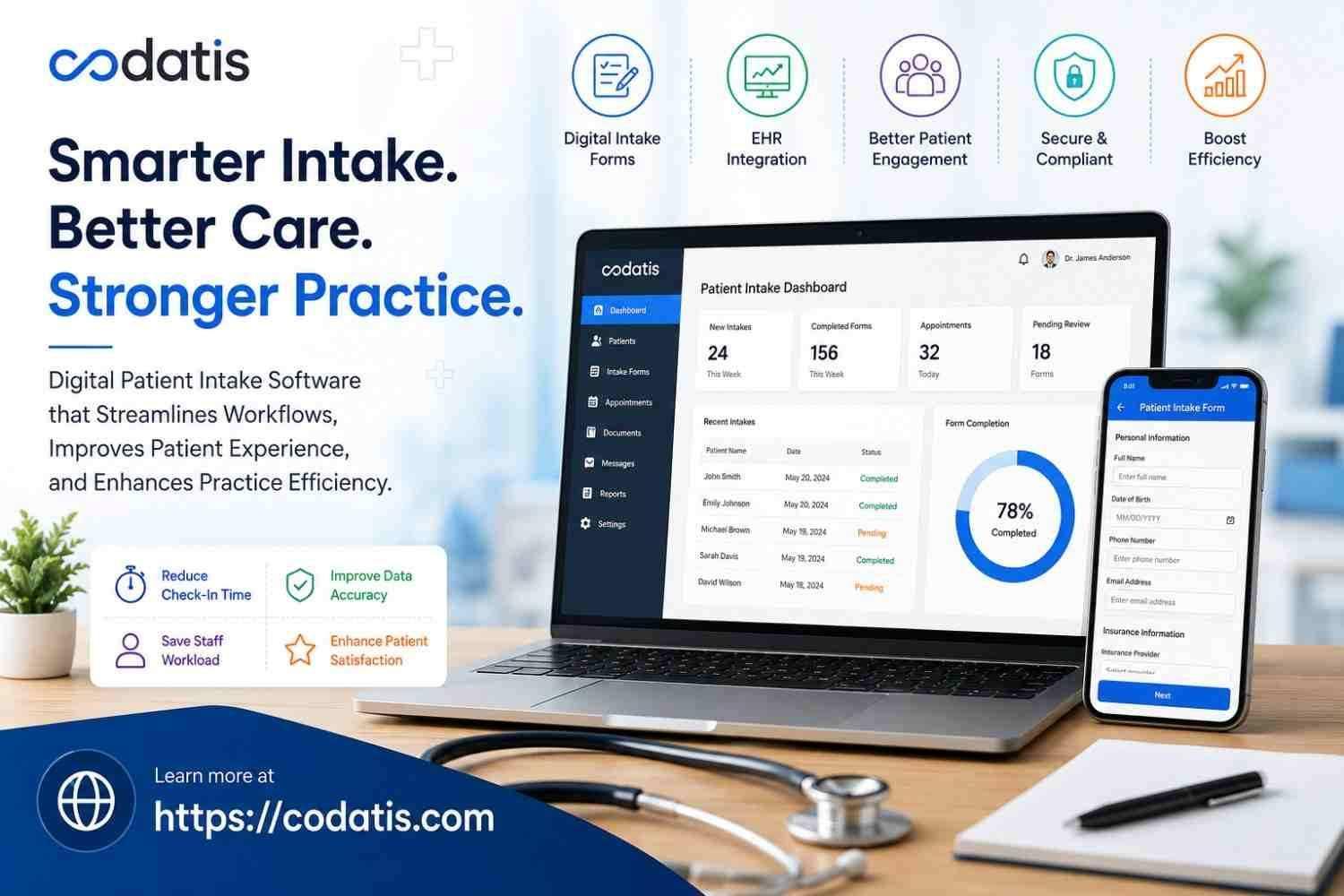
Small medical practices often operate with limited staff, tight budgets, and busy appointment schedules. Managing paper forms, insurance information, consent documents, medical histories, and patient registration manually can quickly become time-consuming. Digital patient intake software can help small practices simplify these processes while creating a smoother experience for both patients and staff.
However, choosing the right solution requires more than looking at the number of features. Small practices need software that is affordable, easy to use, mobile-friendly, secure, and capable of integrating with their existing EHR or practice management system.
This guide explains what small practices should look for and which types of Patient Intake EMR Software can be the best fit in 2026.
What Is Patient Intake Software?
Patient intake software allows patients to complete registration and healthcare forms electronically before or during their appointment. Instead of filling out paper forms in a waiting room, patients can use a smartphone, tablet, computer, or kiosk.
Common capabilities include:
-
Digital registration
-
Medical history forms
-
Insurance information
-
Electronic signatures
-
Consent documents
-
Patient questionnaires
-
Appointment information
-
Digital check-in
-
Patient payments
-
EHR integration
For a small practice, these capabilities can reduce repetitive administrative work and help staff spend more time assisting patients.
Why Small Practices Need Digital Patient Intake
Small medical offices often have fewer employees handling multiple responsibilities. The same staff member may manage scheduling, registration, phone calls, insurance information, payments, and other administrative tasks.
Paper-based intake can make these responsibilities more difficult.
Digital intake can help by:
-
Reducing paperwork
-
Speeding up registration
-
Minimizing manual data entry
-
Improving information accuracy
-
Reducing waiting-room congestion
-
Making forms easier to organize
-
Sending automated reminders
-
Improving patient communication
The right Patient Intake EMR Software can therefore provide operational benefits without requiring a large technology team.
What Should Small Practices Look for?
1. Simple Digital Registration
The registration process should be easy for patients to understand. A complicated form can discourage patients from completing it before their appointment.
Look for a platform that supports mobile-friendly forms and allows patients to enter demographics, contact information, insurance details, and other required information.
2. EHR Integration
EHR integration is especially important for small practices because staff resources are limited.
A system that collects information but requires employees to manually copy it into the EHR may not provide enough efficiency.
Practices using patient medical record software should verify that the intake platform can connect with their existing system.
A strong integration can allow patient information to flow directly into the electronic chart.
3. Affordable Pricing
Budget is one of the biggest concerns for small medical offices.
When researching patient emr software Pricing, practices should look beyond the advertised monthly subscription. Ask about implementation, integrations, training, support, payment processing, and additional users.
The goal should be finding software that provides the necessary features without paying for unnecessary enterprise-level capabilities.
4. Mobile Access
Patients increasingly expect to complete healthcare forms from their phones.
A mobile-friendly intake platform allows patients to complete forms before arriving at the office, which can reduce front-desk workload.
Small practices should test the patient experience on both smartphones and tablets before purchasing.
Best Patient Intake Software Options for Small Practices
There is no single best platform for every small medical practice. The right choice depends on the practice's specialty, existing EHR, patient volume, budget, and workflow.
Tebra
Tebra is designed around independent healthcare practices and combines EHR, practice management, billing, scheduling, and patient engagement capabilities.
For small practices that want more than basic digital forms, an integrated platform can reduce the need for multiple separate systems.
Tebra can be worth considering when a practice wants intake connected with scheduling, patient communication, billing, and other workflows.
NexHealth
NexHealth focuses on digital patient experiences and practice automation. Its capabilities include online scheduling, digital forms, reminders, communication, and other patient-facing workflows.
It can be a good option for practices that already have an EHR and primarily want to improve their digital patient experience.
Phreesia
Phreesia provides digital registration, intake, check-in, payments, and other patient-facing capabilities.
It can be particularly useful for practices that need comprehensive digital front-desk workflows. However, smaller organizations should carefully compare pricing and implementation requirements against their patient volume.
Luma Health
Luma Health combines patient engagement with communication, scheduling, reminders, and digital healthcare workflows.
It may be appropriate for practices that want intake to become part of a broader patient communication strategy.
Patient Intake Software for Different Specialties
Small practices should also consider whether the platform can support their specialty.
For example, patient intake software for rheumatologists may need customized forms for symptoms, medications, pain levels, and previous treatments.
A neurology practice may need neurology patient registration software capable of collecting specialized clinical and demographic information.
An ophthalmology practice may need an ophthalmology patient revenue platform that connects registration with insurance, payments, and financial workflows.
Customization is therefore an important consideration even for smaller organizations.
Patient Engagement Features for Small Practices
Patient intake does not have to operate as a standalone process.
A patient engagement software platform can connect registration with other patient-facing activities such as:
-
Appointment scheduling
-
Reminders
-
Secure messaging
-
Digital forms
-
Payments
-
Patient surveys
-
Follow-up communication
Using one connected system can reduce the complexity of managing several separate applications.
Practices searching for software for patient engagement should determine whether they need only digital intake or a broader patient experience platform.
Patient Portal and Existing Systems
Some practices already use patient portals as part of their EHR environment.
For example, organizations researching epic patient software may already have access to native patient-facing tools through their existing Epic environment.
Similarly, searches for a therabill patient portal may be relevant to practices exploring patient communication and portal functionality.
Before purchasing another application, small practices should review the capabilities they already receive from their EHR or practice management vendor. Adding a separate product may not be necessary if existing tools already meet their intake requirements.
What About PatientPop?
Small practices may encounter searches for patientpop software and patientpop pricing when researching patient engagement and digital intake solutions.
PatientPop became part of Tebra, so practices should evaluate Tebra's current products and pricing rather than relying on older PatientPop information.
The important question is whether the current platform meets the practice's needs for digital registration, patient engagement, EHR integration, scheduling, and billing.
Security and Compliance
Small practices should never overlook security when choosing intake software.
Patient intake information can include sensitive medical, demographic, and financial data. Vendors should provide appropriate security controls and explain how patient information is protected.
Ask about:
-
Data encryption
-
User permissions
-
Authentication
-
Audit controls
-
Secure document storage
-
Data backups
-
Compliance requirements
The platform should make it easy for authorized employees to access information while preventing unauthorized access.
Patient Chart and EHR Integration
A good intake solution should support the practice's broader clinical workflow.
For example, if patients complete a medical history questionnaire online, clinicians should be able to access the information through the appropriate patient chart software or EHR workflow.
The same principle applies to a charting EHR. Information should be organized in a way that makes it useful to providers rather than simply creating another document that staff must open separately.
Pricing and Patient Engagement Software Cost
Small practices should calculate the total cost of ownership.
The patient engagement software cost may include more than the basic subscription.
Potential expenses include:
-
Monthly subscription
-
Implementation
-
EHR integration
-
Training
-
Technical support
-
Payment processing
-
Additional users
-
Premium features
-
Hardware
A less expensive platform may become costly if it requires significant manual work or additional software.
Request a Patient Intake Software Demo
Before choosing a platform, request a patient emr software Demo.
During the demonstration, ask the vendor to show a complete patient workflow from registration through EHR integration.
An ehr demo software session should demonstrate:
-
Digital registration
-
Medical history
-
Insurance collection
-
Electronic signatures
-
Automated reminders
-
EHR integration
-
Digital check-in
-
Patient payments
-
Staff review
-
Reporting
The practice should involve front-desk staff and providers in the evaluation.
Is Patient Intake Software Worth It for a Small Practice?
For many small practices, digital intake can provide a strong return by reducing repetitive administrative tasks and improving patient flow.
The biggest benefits often come from automation. Patients can complete forms before arriving, staff can review information in advance, and clinicians can access relevant information through the EHR.
The best solution is not necessarily the platform with the longest feature list. It is the one that solves the practice's specific problems at a reasonable cost.
Final Verdict
The best Patient Intake EMR Software for a small medical practice should be affordable, easy to use, secure, mobile-friendly, customizable, and compatible with the practice's existing EHR.
Tebra, NexHealth, Phreesia, Luma Health, and other digital intake platforms can be worth evaluating depending on the practice's requirements. Before making a decision, compare pricing, EHR integration, patient experience, specialty support, automation, security, and customer service.
A live demonstration is also important because a platform may look impressive on paper but work differently in a real clinical environment.
For practices researching EHR, patient intake, and healthcare technology solutions, Codatis provides useful resources and comparisons to support more informed software decisions.
FAQs
What is the best patient intake software for small practices?
There is no universal choice. Tebra, NexHealth, Phreesia, and Luma Health are among the platforms worth evaluating, depending on the practice's EHR, budget, specialty, and workflow.
How much does patient intake software cost?
Pricing varies based on providers, patient volume, features, integrations, implementation, and support. Small practices should request customized quotes.
Does patient intake software integrate with EHR systems?
Many modern platforms offer EHR integrations. Practices should confirm compatibility with their specific EHR before purchasing.
Can small specialty practices use digital intake?
Yes. Customizable forms can support specialties such as rheumatology, neurology, ophthalmology, and many others.
What is the difference between patient intake and patient engagement software?
Patient intake focuses on collecting information and completing registration, while patient engagement software can include scheduling, reminders, messaging, payments, surveys, and other communication tools.
Should a small practice request a software demo?
Yes. A demo allows staff to test registration, forms, EHR integration, check-in, payments, and other workflows before making a purchasing decision.

 Arabic
 French
 Spanish
 Portuguese
 Deutsch
 Turkish
 Dutch
Dutch
 Italiano
 Russian
 Romaian
 Portuguese (Brazil)
 Greek
Greek