


The Data Control Plane: Inside the Modern Data Governance Market Platform
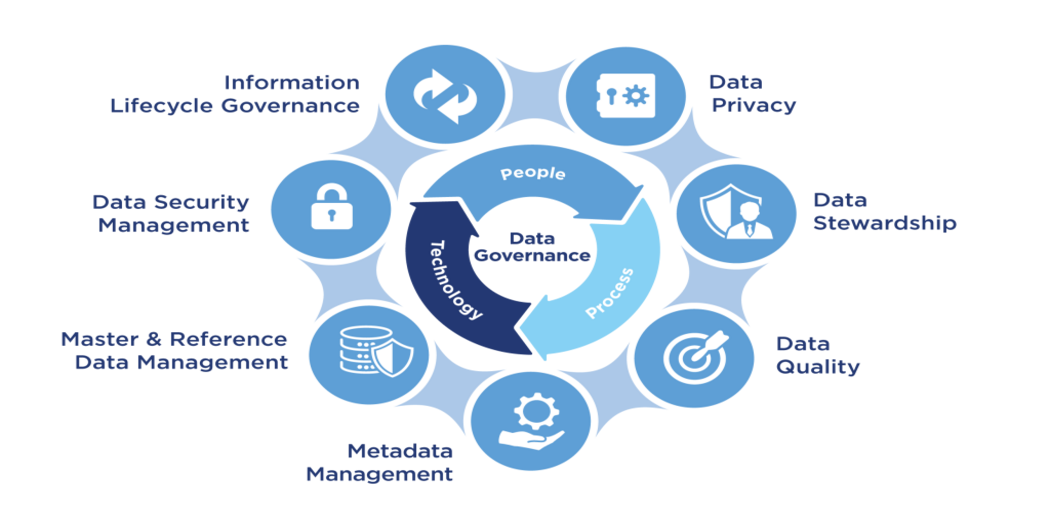
The modern practice of data governance is orchestrated by a sophisticated and highly integrated technology platform that acts as a central control plane for an organization's entire data estate. The contemporary Data Governance Market Platform is not a single application but a unified suite of tools designed to provide a comprehensive solution for data discovery, cataloging, quality management, and policy enforcement. The architecture of these platforms is built to handle the scale and complexity of the modern hybrid, multi-cloud environment, connecting to a vast array of data sources, from traditional databases to cloud data lakes and SaaS applications. At its heart is an intelligent data catalog, powered by a metadata graph, which serves as the "brain" of the platform. This central hub is then surrounded by specialized modules for data quality, data lineage, privacy, and access control, all working together to create a single, unified system of record and control for an organization's data assets.
The Foundation: Data Discovery, Profiling, and the Data Catalog
The entire data governance process begins with understanding what data you have and where it is. The platform's data discovery and profiling engine is the foundational component that solves this problem. It uses a wide range of connectors to scan an organization's entire data landscape—across on-premise systems and multiple clouds—to automatically identify data assets. As it discovers data, it profiles its contents to understand its structure, statistics, and quality. This discovered metadata is then used to populate the data catalog, which is the core of the governance platform. The data catalog acts like a Google for enterprise data. It provides a searchable inventory of all available datasets, enriched with business context, definitions, and user-generated ratings and comments. This solves a major pain point for data consumers, allowing them to quickly find the trustworthy, relevant data they need for their analysis without having to ask around or rely on tribal knowledge.
The Quality and Lineage Engine
Once data is discovered and cataloged, the next critical function is to ensure its quality and trustworthiness. This is the role of the data quality management engine within the platform. This module allows data stewards to define data quality rules (e.g., "a customer's postcode must be in a valid UK format") and then continuously monitor datasets to check for violations of these rules. It provides dashboards to track data quality scores over time and tools for data cleansing and remediation. Closely linked to quality is data lineage. The data lineage engine automatically traces the journey of data as it moves through the organization's systems. It provides a visual map that shows where a piece of data originated, what transformations were applied to it, and where it is being used. This is crucial for both trust and compliance. For an analyst, it allows them to understand the provenance of a report. For a compliance officer, it provides the audit trail needed to prove where sensitive data has flowed.
The Policy and Enforcement Layer: Access Control and Privacy
The final layer of the platform is focused on setting and enforcing policies around data access and usage. The data access governance module allows organizations to define granular, role-based access control policies. Instead of managing permissions on hundreds of individual systems, administrators can define a policy centrally in the governance platform (e.g., "the marketing team in France can only see data for French customers") and the platform can then enforce that policy across multiple underlying data sources. The data privacy module is a specialized part of this layer. It uses data discovery and classification to automatically identify and tag personally identifiable information (PII) across the data estate. It then provides tools for managing user consent, responding to data subject access requests (DSARs), and applying data masking or anonymization techniques to protect sensitive information, providing the essential technical controls needed to comply with regulations like GDPR.
Explore More Like This in Our Regional Reports:
Italy Artificial Intelligence Market
 Spanish
 English
 Arabic
 French
 Portuguese
 Deutsch
 Turkish
 Dutch
Dutch
 Italiano
 Russian
 Romaian
 Portuguese (Brazil)
 Greek
Greek