


Why More Filler Is Not Always Better: Jawline Filler Injections in Dubai
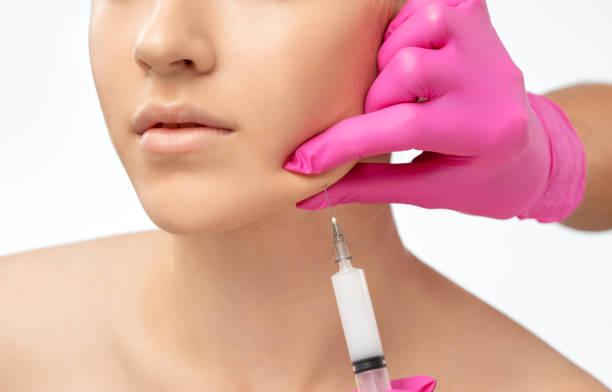
A sharper jawline does not necessarily require more filler. Jawline Filler Injections in Dubai are most effective when the amount, placement, and product are selected according to the patient's facial anatomy rather than a predetermined number of syringes.
Adding excessive volume can make the lower face look wider, heavier, or less natural. More importantly, dermal filler is a medical procedure that requires anatomical knowledge, appropriate product selection, precise technique, and a plan for managing potential complications.
Why More Jawline Filler Does Not Always Mean More Definition
The jawline is a three-dimensional structure.
It is not simply a line that becomes more attractive as additional volume is placed along it. The final appearance depends on how the jaw relates to the chin, cheeks, lower face, neck, and overall facial proportions.
Too little filler may fail to create the desired structural change.
Too much may create:
- Excessive lower-face width
- An overly prominent mandibular angle
- Heavy-looking facial contours
- Disproportion between the chin and jaw
- An unnatural transition into the neck
- A visibly overtreated appearance
The ideal amount is therefore the amount required to achieve the intended correction—not the largest amount that can technically be injected.
The Goal Is Proportion, Not Maximum Volume
A strong jawline should complement the rest of the face.
For example, increasing jaw width in a patient who already has a broad lower face may emphasize width rather than improve definition.
Likewise, if the main issue is limited chin projection, placing large amounts of filler along the jaw may not solve the underlying aesthetic imbalance.
A comprehensive assessment considers:
- Chin projection
- Mandibular width
- Jaw angle
- Lower-face height
- Cheek width
- Facial symmetry
- Skin and soft-tissue characteristics
- Overall facial proportions
The treatment plan should then address the specific structural deficiency.
Jawline Filler Injections in Dubai: Volume vs Definition
Volume and definition are related, but they are not identical.
A small amount of strategically placed filler can sometimes create a stronger visual boundary than a larger amount distributed broadly across the jaw.
| Treatment approach | Potential effect | Main concern |
|---|---|---|
| Minimal targeted volume | Subtle structural definition | May not be enough for significant correction |
| Moderate strategic volume | Stronger contour with balanced proportions | Requires careful planning |
| Broad volume placement | More overall fullness | Can make the lower face appear wider |
| Excessive volume | Highly prominent contour | May appear heavy or unnatural |
| Repeated layering | Increasing cumulative volume | Can complicate assessment and future treatment |
This is why the number of syringes should not be treated as a measure of treatment quality.
A skilled injector is not trying to maximize product usage. The objective is to achieve an appropriate correction with the least unnecessary intervention.
Why Facial Anatomy Matters More Than Syringe Count
The FDA emphasizes that different facial regions have location-specific anatomical considerations involving structures such as blood vessels, nerves, and muscles.
The jawline is therefore not an interchangeable injection zone.
Before treatment, the clinician should understand:
- Where important vascular structures are located
- The depth and characteristics of the relevant tissues
- The underlying mandibular anatomy
- Existing asymmetries
- Previous filler placement
- The properties of the selected product
Published anatomical guidance similarly emphasizes detailed knowledge of facial anatomy as an important component of reducing vascular complications during filler procedures.
Why Conservative Treatment Can Look More Natural
Natural-looking aesthetic treatment does not mean that the result must be invisible.
It means the enhancement should remain compatible with the patient's existing anatomy.
A conservative approach can help preserve:
- Natural facial movement
- Appropriate facial width
- Smooth transitions
- Chin-jaw harmony
- Three-quarter facial balance
- A believable lower-face contour
The objective is often to improve what is already there rather than construct an entirely new facial shape.
When Too Much Filler Can Make the Jaw Look Wider
This is particularly important for patients who describe their goal as a “slimmer” or “sharper” face.
Adding volume to the lateral jaw can increase apparent width.
If a patient's face is already broad, aggressive lateral augmentation may emphasize the exact feature they are trying to minimize.
A more appropriate strategy may involve evaluating whether the concern is actually caused by:
- Lack of jawline definition
- Chin position
- Submental fullness
- Skin laxity
- Masseter muscle prominence
- Natural skeletal width
- Facial asymmetry
Filler can address some structural contour concerns, but it does not remove fat, reduce bone width, or automatically tighten significant skin laxity.
Correctly identifying the cause is therefore more important than simply adding volume.
How Doctors Decide How Much Filler Is Needed
There is no universal syringe count that works for every patient.
The amount can depend on:
- Treatment area
- Desired degree of correction
- Filler characteristics
- Existing facial volume
- Tissue thickness
- Chin and jaw proportions
- Previous treatments
- Degree of asymmetry
- Patient expectations
The clinician may begin with a conservative plan and reassess the result rather than attempting to achieve maximum correction during a single session.
This can be particularly valuable for first-time patients who are unfamiliar with how their face responds to filler.
Does the Type of Filler Matter?
Yes.
Different filler materials have different physical and clinical characteristics, and individual products have specific approved indications. The FDA notes that dermal fillers vary in material, duration, and approved uses.
For structural contouring, the clinician may consider characteristics such as:
- Projection
- Firmness
- Tissue integration
- Longevity
- Injection depth
- Reversibility
- Treatment location
The most expensive or longest-lasting product is not automatically the best choice.
The product should be selected according to the clinical objective and patient anatomy.
Why Layering Filler Requires Careful Planning
Patients sometimes receive filler from different providers over time.
This can make future treatment more complicated because the clinician may not know exactly where previous products were placed, which material was used, or how much remains.
Current filler-safety recommendations emphasize reviewing previous cosmetic procedures and avoiding inappropriate layering over older or minimally degradable filler.
Before receiving additional jawline filler, tell your provider about:
- Previous jawline filler
- Chin filler
- Cheek filler
- Other facial injectables
- The approximate treatment date
- The product used, if known
- Any previous complications
More information allows for better treatment planning.
Is More Filler More Dangerous?
Volume alone is not the only factor determining complication risk.
A recent review of permanent filler complications identified anatomy, technique, product characteristics, and inadequate management as major contributors to severe complications.
The important point is that filler safety depends on much more than the quantity injected.
A qualified injector should understand the relevant anatomy, use appropriate technique, select the product carefully, and have a clear plan for recognizing and managing complications.
What Are the Common Temporary Effects?
Temporary reactions can occur after dermal filler treatment.
These may include:
- Swelling
- Bruising
- Redness
- Tenderness
- Pain
- Itching
The FDA notes that many common side effects occur shortly after injection and resolve within days to weeks, although delayed reactions can also occur.
This is one reason why patients should not judge the final aesthetic outcome immediately after treatment.
The initial appearance can be influenced by swelling and other temporary changes.
What Are the Serious Risks?
Serious complications are uncommon, but they should never be ignored.
The most concerning filler complication is accidental injection into a blood vessel. This can compromise blood flow and, in severe cases, cause tissue necrosis, vision abnormalities including blindness, or stroke.
Research and expert consensus emphasize that early recognition and prompt management are important when vascular compromise occurs.
Patients should seek urgent medical attention if they experience symptoms such as:
- Unusual or severe pain
- Significant skin blanching or unusual discoloration
- Vision changes
- Sudden weakness or numbness
- Difficulty speaking
- Other symptoms suggestive of stroke
These symptoms should not be treated as normal post-filler swelling.
Why Provider Experience Matters
A successful jawline filler treatment depends on more than the filler brand.
The injector should understand facial anatomy, injection depth, tissue planes, product characteristics, and potential complications.
The FDA specifically advises that dermal fillers should be administered by appropriately trained healthcare providers who understand facial anatomy and have a plan for managing vascular complications.
When evaluating a provider, ask:
- What training do you have in facial filler injections?
- How frequently do you perform jawline treatments?
- Which filler are you recommending?
- Why is that product appropriate for my anatomy?
- How will you determine the amount needed?
- Do you assess the chin and jaw together?
- How do you manage potential vascular complications?
- What aftercare will I receive?
- What should I do if I experience unusual pain or skin discoloration?
These questions can reveal whether the consultation is focused on medical assessment or simply selling additional product.
How Dubai Patients Can Avoid an Overfilled Look
Dubai's aesthetic market offers many options for facial contouring, which can make it tempting to compare treatments based on the amount of filler offered.
A better comparison is based on the quality of the treatment plan.
Look for:
- Individual facial assessment
- Clear explanation of expected outcomes
- Appropriate product selection
- Conservative volume planning
- Before-and-after documentation
- Transparent discussion of risks
- Qualified medical supervision
- A clear emergency protocol
Do not choose a provider simply because they promise the most dramatic jawline.
A dramatic result is not necessarily a better result.
What Does a High-Quality Jawline Filler Result Look Like?
A well-planned result should fit the patient's face.
Depending on the starting anatomy, this may mean:
- A clearer mandibular border
- Better chin-to-jaw continuity
- More defined jaw angles
- Improved facial symmetry
- A stronger profile
- A cleaner lower-face silhouette
It should not automatically mean the largest possible jaw.
The best outcome is the one that achieves the patient's realistic aesthetic goal without compromising facial harmony.
The Strategic Investment
The real value of Jawline Filler Injections in Dubai is not measured by the number of syringes used. It is measured by whether the treatment improves facial structure while preserving proportion, natural appearance, and appropriate medical safety.
Patients should look for a provider who evaluates the entire lower face, explains why a particular amount and product are being recommended, and has a clear plan for managing complications. For patients considering individualized jawline contouring, Tajmeels Clinic can be part of that consultation process, where treatment goals can be assessed against facial anatomy rather than simply maximizing filler volume.

 Arabic
 French
 Spanish
 Portuguese
 Deutsch
 Turkish
 Dutch
Dutch
 Italiano
 Russian
 Romaian
 Portuguese (Brazil)
 Greek
Greek