


Real World Asset Tokenization: Connecting Legacy Assets With Web3 Ecosystems
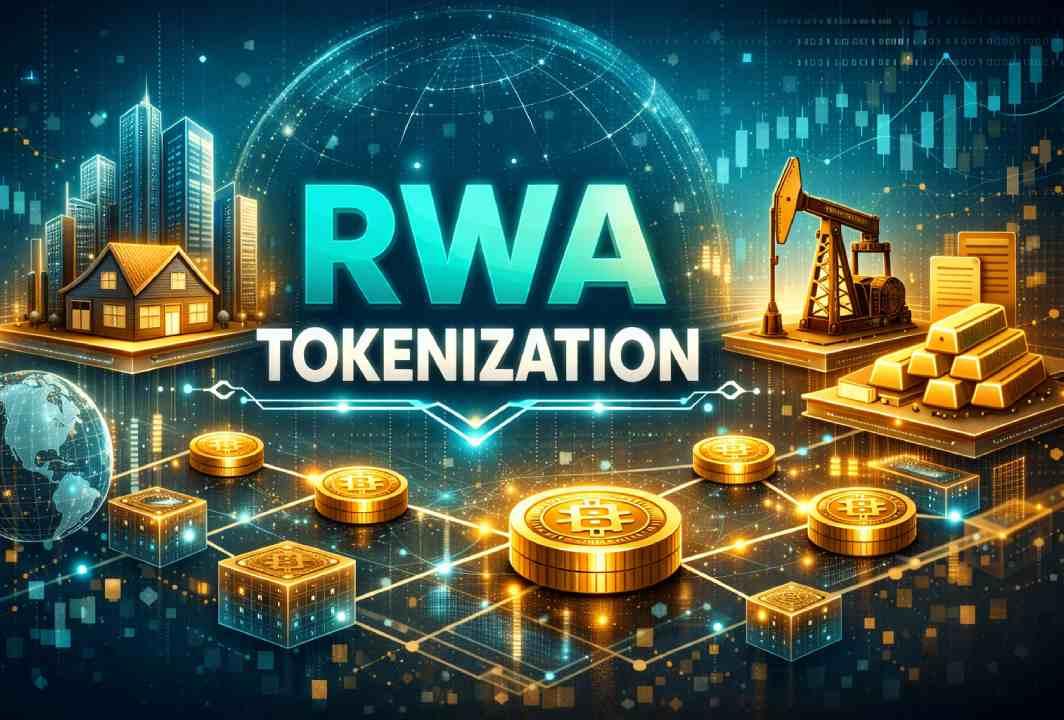
The evolution of blockchain technology has introduced new frameworks for representing, managing, and transferring value across digital networks. Among these innovations, real world asset (RWA) tokenization stands out as a transformative mechanism that bridges traditional financial systems with decentralized infrastructure. By converting physical and conventional financial assets into blockchain-based tokens, RWA tokenization enables seamless integration between legacy markets and Web3 ecosystems, unlocking liquidity, accessibility, and operational efficiency.
Understanding Real World Asset Tokenization
Real world asset tokenization refers to the process of digitizing tangible and intangible assets such as real estate, commodities, equities, bonds, and intellectual property—into tokens recorded on a blockchain. These tokens represent ownership rights, revenue streams, or claims on the underlying asset. Blockchain platforms like Ethereum and Polygon provide the infrastructure required to issue, manage, and transfer these tokenized assets securely and transparently.
Unlike traditional asset management systems, which rely heavily on intermediaries, real wordl asset tokenization leverages decentralized networks and smart contracts to automate transactions and reduce friction. This shift not only enhances efficiency but also redefines how assets are accessed and traded globally.
The Need to Connect Legacy Assets With Web3
Legacy financial systems are often characterized by limited liquidity, high entry barriers, fragmented ownership structures, and inefficient settlement processes. Assets such as commercial real estate, fine art, and private equity are typically illiquid and accessible only to a small group of investors. Additionally, cross-border transactions involve complex regulatory frameworks and lengthy settlement times.
Web3 ecosystems, on the other hand, are built on principles of decentralization, transparency, and programmability. By connecting legacy assets to Web3, tokenization introduces a new paradigm where assets can be fractionalized, traded globally, and integrated into decentralized finance (DeFi) protocols. This convergence creates a more inclusive financial system that allows broader participation while improving asset utilization.
How Tokenization Bridges Traditional and Decentralized Systems
Digitization and On-Chain Representation
The first step in connecting legacy assets with Web3 involves converting them into digital tokens. These tokens are issued through smart contracts, which define the ownership structure, transfer rules, and compliance requirements. Blockchain networks such as Solana enable high-speed transactions and scalable token issuance, making them suitable for large-scale tokenization projects.
Each token serves as a digital representation of the underlying asset, ensuring transparency and immutability. Ownership records are stored on the blockchain, reducing the risk of fraud and eliminating the need for centralized registries.
Fractional Ownership and Accessibility
One of the most significant advantages of RWA tokenization is fractional ownership. By dividing assets into smaller units, tokenization allows investors to purchase fractions of high-value assets. For example, a commercial property worth millions can be divided into thousands of tokens, each representing a share of ownership.
This model lowers the barrier to entry, enabling retail investors to access asset classes that were previously restricted to institutional participants. It also enhances liquidity, as smaller units can be traded more easily on secondary markets.
Integration With Decentralized Finance (DeFi)
Tokenized assets can be integrated into DeFi ecosystems, where they can be used as collateral, traded on decentralized exchanges, or included in liquidity pools. Protocols built on networks like Ethereum enable lending, borrowing, and yield generation using tokenized real-world assets.
This integration creates new financial opportunities, allowing asset holders to unlock additional value from their holdings. For instance, tokenized real estate can be used as collateral for loans, providing liquidity without requiring the sale of the underlying asset.
Smart Contracts and Automation
Smart contracts play a crucial role in bridging legacy assets with Web3. These self-executing programs automate processes such as dividend distribution, interest payments, and ownership transfers. By eliminating manual intervention, smart contracts reduce operational costs and improve efficiency.
Automation also enhances transparency, as all transactions and contract conditions are recorded on the blockchain. This ensures that all stakeholders have access to accurate and up-to-date information.
Compliance and Regulatory Integration
Connecting legacy assets with Web3 requires adherence to regulatory frameworks governing securities, property rights, and financial transactions. Tokenization platforms incorporate compliance mechanisms such as Know Your Customer (KYC) and Anti-Money Laundering (AML) checks to ensure legal compliance.
Permissioned blockchain environments and regulated token standards enable issuers to restrict access based on jurisdiction, investor accreditation, and other regulatory requirements. This ensures that tokenized assets can operate within existing legal frameworks while benefiting from blockchain technology.
Key Asset Classes in RWA Tokenization
Real Estate
Real estate is one of the most prominent use cases for tokenization. By converting properties into digital tokens, developers and asset managers can raise capital more efficiently and offer fractional ownership to investors. Tokenized real estate also enables faster transactions and improved liquidity compared to traditional property markets.
Commodities
Commodities such as gold, oil, and agricultural products can be tokenized to facilitate trading and ownership transfer. Tokenization provides real-time tracking, transparent pricing, and reduced reliance on intermediaries, making commodity markets more efficient.
Fixed Income Instruments
Bonds and other fixed income assets can be tokenized to streamline issuance, settlement, and trading processes. Tokenized bonds can be traded on blockchain-based platforms, reducing settlement times and improving accessibility for investors.
Art and Collectibles
High-value assets like fine art, rare collectibles, and luxury goods can be tokenized to enable fractional ownership and broader market participation. This creates new investment opportunities while preserving the uniqueness and value of the underlying assets.
Private Equity and Venture Capital
Tokenization allows private equity and venture capital investments to be divided into smaller units, making them accessible to a wider range of investors. It also introduces secondary market liquidity, which is typically limited in traditional private markets.
Benefits of Connecting Legacy Assets With Web3
Enhanced Liquidity
Tokenization transforms traditionally illiquid assets into tradable digital tokens. Secondary markets enable continuous trading, improving liquidity and allowing investors to enter and exit positions more easily.
Global Accessibility
Blockchain networks operate without geographical restrictions, enabling global participation in asset markets. Investors from different regions can access tokenized assets without the need for complex cross-border processes.
Cost Efficiency
By reducing reliance on intermediaries, tokenization lowers transaction costs and administrative overhead. Smart contracts automate processes, further enhancing efficiency.
Transparency and Security
Blockchain technology provides a transparent and immutable record of transactions. This reduces the risk of fraud and enhances trust among participants.
Portfolio Diversification
Tokenization allows investors to diversify their portfolios across multiple asset classes with smaller capital requirements. This reduces risk and improves overall portfolio performance.
Challenges and Limitations
Despite its potential, RWA tokenization faces several challenges. Regulatory uncertainty remains a significant barrier, as different jurisdictions have varying rules governing digital assets. Ensuring compliance across multiple regions can be complex and resource-intensive.
Another challenge is the need for reliable asset valuation and verification. Accurate representation of real-world assets on the blockchain requires trusted data sources and auditing mechanisms. Additionally, interoperability between blockchain networks and traditional financial systems is still evolving.
Market adoption is another critical factor. While institutional interest in tokenization is growing, widespread adoption requires education, infrastructure development, and regulatory clarity.
The Role of Infrastructure in RWA Tokenization
The success of RWA tokenization depends on robust infrastructure that supports asset issuance, management, and trading. Blockchain platforms like Polygon provide scalability and low transaction costs, making them suitable for large-scale tokenization initiatives.
In addition to blockchain networks, tokenization platforms offer tools for compliance, investor management, and asset tracking. These platforms act as a bridge between traditional systems and Web3 ecosystems, enabling seamless integration and operation.
Future Outlook
The future of real world asset tokenization is closely tied to the evolution of Web3 technologies and regulatory frameworks. As blockchain adoption increases, more asset classes are likely to be tokenized, expanding the scope of digital asset markets.
Advancements in interoperability, scalability, and compliance solutions will further enhance the integration of legacy assets with Web3 ecosystems. Institutional adoption is expected to play a significant role in driving growth, as financial institutions explore tokenization as a means to improve efficiency and unlock new revenue streams.
Conclusion
Real world asset tokenization represents a significant step toward bridging the gap between traditional finance and decentralized ecosystems. By converting legacy assets into blockchain-based tokens, it enables greater liquidity, accessibility, and efficiency. Through the use of platforms like Ethereum and Solana, tokenization creates a unified framework where traditional and digital assets can coexist and interact seamlessly.
As the technology matures, RWA tokenization is expected to reshape global financial markets, offering new opportunities for investors and asset owners alike. By connecting legacy assets with Web3 ecosystems, it paves the way for a more inclusive, transparent, and efficient financial future.

 English
 Arabic
 French
 Spanish
 Portuguese
 Deutsch
 Dutch
Dutch
 Italiano
 Russian
 Romaian
 Portuguese (Brazil)
 Greek
Greek