


How is IVF Lab Design different from conventional laboratory design?
INTRODUCTION
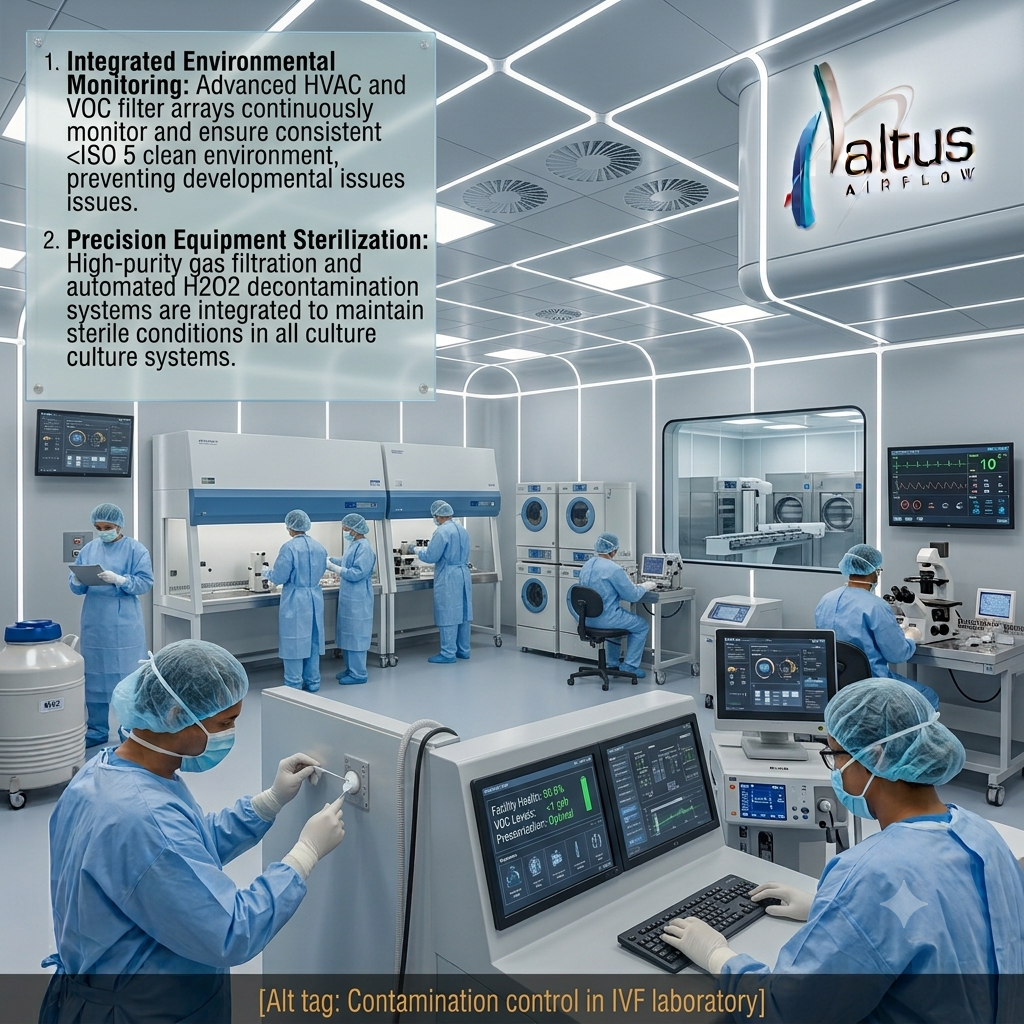
A professionally engineered IVF Lab Design is fundamentally different from a conventional laboratory because it is specifically developed to support assisted reproductive procedures that involve handling highly sensitive reproductive cells, embryos, and gametes. While conventional laboratories are designed for general testing, research, or diagnostics, an IVF laboratory requires extremely stringent environmental control, contamination prevention, temperature stability, air purification, and workflow optimization. Every aspect of IVF Lab Design—from cleanroom engineering and laminar airflow systems to HEPA filtration, HVAC integration, environmental monitoring, and laboratory zoning—is carefully planned to create ideal conditions for embryo development and successful fertility treatments. These specialized requirements make IVF laboratories among the most technically advanced healthcare environments.
As fertility treatments continue to advance, modern IVF laboratories demand precision engineering that goes beyond standard laboratory construction. Specialized infrastructure helps maintain embryo viability, supports laboratory efficiency, minimizes contamination risks, and ensures compliance with national and international healthcare guidelines. This blog explains how IVF Lab Design differs from conventional laboratory design and why specialized engineering is essential for successful fertility clinics.
Understanding Conventional Laboratory Design
A conventional laboratory is generally designed for routine testing, diagnostics, education, research, or industrial applications.
Typical characteristics include:
- Standard ventilation
- General laboratory furniture
- Routine environmental controls
- Flexible workspaces
- Basic utility infrastructure
Although suitable for many scientific activities, these laboratories do not provide the strict environmental control required for reproductive medicine.
What Makes IVF Lab Design Unique?
Unlike conventional laboratories, IVF laboratories are built specifically for handling embryos, eggs, and sperm under highly controlled conditions.
Key objectives include:
- Maintaining embryo viability
- Preventing contamination
- Controlling environmental variables
- Supporting precise laboratory workflows
- Ensuring regulatory compliance
Every engineering decision is focused on protecting sensitive reproductive materials.
Cleanroom Engineering
One of the biggest differences is the use of cleanroom principles.
Professional IVF Lab Design incorporates:
- Controlled air quality
- Low particle environments
- Smooth, seamless finishes
- Hygienic construction materials
- Controlled personnel movement
Conventional laboratories generally do not require cleanroom-grade construction.
Advanced HVAC Systems
IVF laboratories rely on sophisticated HVAC systems that maintain exceptionally stable environmental conditions.
These systems regulate:
- Temperature
- Humidity
- Air pressure
- Fresh air supply
- Ventilation efficiency
- Air changes per hour
Conventional laboratories often operate with less demanding environmental requirements.
HEPA Filtration
HEPA filtration is essential in IVF laboratories.
Benefits include:
- Removal of microscopic airborne particles
- Cleaner laboratory air
- Reduced contamination
- Stable environmental quality
- Protection of embryos
Many conventional laboratories do not require continuous HEPA-filtered airflow.
Laminar Airflow Systems
Laminar airflow systems provide uniform, filtered airflow over critical work areas.
Advantages include:
- Reduced turbulence
- Cleaner workstations
- Better contamination control
- Improved air quality
- Enhanced laboratory precision
This level of airflow engineering is rarely necessary in general laboratories.
Environmental Monitoring
Continuous monitoring is critical in IVF laboratories.
Important parameters include:
- Temperature
- Humidity
- Differential pressure
- Carbon dioxide levels
- Airborne particle concentration
- Volatile Organic Compounds (VOCs)
Conventional laboratories usually monitor fewer environmental variables.
Temperature Stability
Embryos are extremely sensitive to temperature changes.
Professional IVF Lab Design maintains:
- Consistent room temperatures
- Stable incubator environments
- Controlled storage conditions
- Minimal temperature fluctuations
General laboratories typically have wider acceptable temperature ranges.
Air Quality Requirements
IVF laboratories require exceptionally clean indoor air.
Air quality management focuses on:
- VOC reduction
- HEPA filtration
- Air purification
- Pressure control
- Continuous ventilation
Maintaining clean air helps support embryo development.
Specialized Laboratory Zoning
An IVF laboratory is divided into dedicated functional areas.
Common zones include:
- Embryology laboratory
- Andrology laboratory
- Cryopreservation room
- Procedure room
- Equipment room
- Storage area
Conventional laboratories often use more generalized layouts.
Workflow Optimization
Efficient workflow is a major focus of IVF Lab Design.
Optimized layouts help:
- Reduce unnecessary movement
- Improve laboratory efficiency
- Minimize contamination
- Enhance staff productivity
- Improve procedural consistency
Workflow engineering is more specialized than in standard laboratories.
Specialized Equipment Integration
IVF laboratories require equipment specifically designed for reproductive medicine.
Common equipment includes:
- CO₂ incubators
- IVF workstations
- Laminar airflow cabinets
- Microscopes
- Cryogenic storage systems
- Environmental monitoring systems
Conventional laboratories use equipment designed for broader scientific applications.
Contamination Control
Preventing contamination is one of the highest priorities in IVF laboratories.
Strategies include:
- Controlled airflow
- Positive pressure environments
- Seamless construction
- HEPA filtration
- Restricted laboratory access
These controls exceed those typically found in standard laboratories.
Construction Materials
Materials used in IVF laboratories are selected for hygiene and durability.
Preferred characteristics include:
- Smooth finishes
- Chemical resistance
- Moisture resistance
- Easy cleaning
- Low particle generation
Conventional laboratories may use materials that are less specialized.
Regulatory Compliance
IVF laboratories must comply with healthcare regulations and fertility-specific guidelines.
Compliance often includes:
- ART Act requirements
- Cleanroom standards
- Quality management systems
- Environmental validation
- Equipment qualification
Conventional laboratories may follow different regulatory frameworks depending on their purpose.
Validation and Commissioning
Before becoming operational, IVF laboratories undergo extensive validation.
Testing commonly includes:
- HEPA filter integrity
- Airflow verification
- Pressure testing
- Environmental monitoring
- HVAC balancing
- Equipment qualification
Validation ensures the laboratory performs according to design specifications.
Staff Safety and Ergonomics
An effective IVF laboratory supports both staff efficiency and comfort.
Design considerations include:
- Ergonomic workstations
- Logical equipment placement
- Efficient circulation paths
- Reduced operator fatigue
- Safe utility access
Better ergonomics improve long-term productivity.
Energy Efficiency
Modern IVF laboratories are designed to reduce energy consumption while maintaining precise environmental control.
Energy-efficient features include:
- High-performance HVAC systems
- Variable frequency drives
- LED lighting
- Smart environmental controls
- Building Management System integration
These systems improve sustainability without compromising laboratory performance.
Future Innovations in IVF Lab Design
Technological advancements continue to improve laboratory performance.
Emerging innovations include:
- AI-assisted environmental monitoring
- IoT-enabled HVAC systems
- Predictive maintenance
- Smart cleanroom controls
- Digital laboratory management
- Automated environmental reporting
These technologies improve reliability and operational efficiency.
Benefits of Specialized IVF Lab Design
Compared with conventional laboratory design, IVF laboratories provide significant advantages.
Major benefits include:
- Superior contamination control
- Enhanced embryo protection
- Stable environmental conditions
- Improved workflow efficiency
- Better laboratory productivity
- Regulatory compliance
- Reduced operational risks
- Long-term infrastructure reliability
These benefits directly support successful fertility treatments.
Conclusion
A specialized IVF Lab Design differs significantly from conventional laboratory design because it is engineered to provide the precise environmental conditions required for handling embryos and reproductive cells. Through the integration of cleanroom engineering, laminar airflow systems, HEPA filtration, advanced HVAC infrastructure, environmental monitoring, specialized zoning, contamination control, ergonomic workflow, and strict regulatory compliance, IVF laboratories deliver the stability, cleanliness, and reliability essential for assisted reproductive procedures. While conventional laboratories serve a broad range of scientific purposes, IVF laboratories require much higher levels of precision, validation, and environmental control. For customized IVF laboratory planning, engineering, validation, and turnkey implementation, Altus Airflow provides advanced solutions tailored to the evolving needs of modern fertility clinics.
Frequently Asked Questions
1. How is IVF Lab Design different from conventional laboratory design?
IVF Lab Design focuses on contamination control, cleanroom engineering, environmental stability, specialized airflow systems, and embryo protection, while conventional laboratories are designed for general research and diagnostic activities.
2. Why does IVF Lab Design require HEPA filtration?
HEPA filtration in IVF Lab Design removes microscopic airborne particles, helping maintain clean air and reducing contamination risks that could affect sensitive reproductive procedures.
3. Does IVF Lab Design require advanced HVAC systems?
Yes. Professional IVF Lab Design incorporates advanced HVAC systems that regulate temperature, humidity, airflow, and pressure to create stable laboratory conditions.
4. What equipment is unique to IVF Lab Design?
Specialized IVF Lab Design includes IVF workstations, CO₂ incubators, laminar airflow cabinets, cryogenic storage systems, embryology microscopes, and environmental monitoring equipment.
5. What are the benefits of professional IVF Lab Design?
Professional IVF Lab Design improves contamination control, laboratory efficiency, workflow optimization, regulatory compliance, embryo protection, environmental stability, and long-term operational performance.
Read Our Previous Blog------>Why is an Ophthalmic Modular Operation Theatre essential for ophthalmic surgeries?
 Portuguese
 English
 Arabic
 French
 Spanish
 Deutsch
 Turkish
 Dutch
Dutch
 Italiano
 Russian
 Romaian
 Portuguese (Brazil)
 Greek
Greek