


How ePRO Fits Within the eCOA Framework
Introduction
Clinical trials increasingly rely on digital technologies to collect accurate, timely, and patient-centered data. Among these technologies, electronic Clinical Outcome Assessments, or eCOA, have become an important part of modern clinical research. eCOA refers to the digital collection of outcomes that describe how a patient feels, functions, or responds to treatment.
Within this broader framework, electronic patient-reported outcome technology plays a specific and highly valuable role. An ePRO system enables trial participants to directly record information about their symptoms, quality of life, treatment experience, and daily functioning without requiring interpretation by a clinician or caregiver.
Understanding how ePRO fits within the eCOA framework can help sponsors, contract research organizations, and research sites select the right tools for patient-focused data collection.
What Is the eCOA Framework?
eCOA is an umbrella term covering several types of clinical outcome assessments collected electronically. These assessments are generally divided into four categories:
-
Patient-reported outcomes, or PROs
-
Clinician-reported outcomes, or ClinROs
-
Observer-reported outcomes, or ObsROs
-
Performance outcomes, or PerfOs
Each assessment type captures a different perspective. ClinROs are completed by trained healthcare professionals, while ObsROs are recorded by parents, caregivers, or other observers. PerfOs evaluate a participant’s ability to perform a specific task under standardized conditions.
Patient-reported outcomes are unique because the information comes directly from the participant. There is no interpretation by an investigator or another observer. This makes electronic patient reported outcomes especially valuable when measuring experiences such as pain, fatigue, nausea, emotional well-being, mobility, sleep quality, or treatment satisfaction.
The Role of ePRO Within eCOA
ePRO is a specific category within the wider eCOA ecosystem. While an eCOA platform may support multiple assessment types, an ePRO solution focuses specifically on capturing information directly from patients.
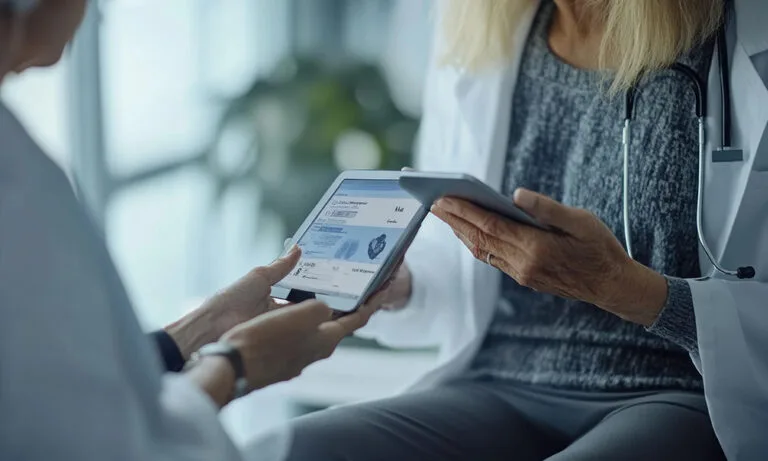
Participants may complete questionnaires, diaries, symptom assessments, or quality-of-life instruments using smartphones, tablets, web portals, or provisioned devices. The data is transmitted electronically to the study database, where research teams can review responses and monitor completion.
For example, a study evaluating a new treatment for chronic pain may ask participants to record their pain intensity every evening. An ePRO system can automatically send reminders, display the appropriate questionnaire, apply completion windows, and securely transmit the response to the study team.
This process gives sponsors access to structured information about the participant’s experience throughout the trial, not only during scheduled site visits.
How ePRO Differs From Other eCOA Components
Although ePRO is part of eCOA, the terms should not be used interchangeably. eCOA covers the complete range of electronic clinical outcome assessments, while ePRO refers only to outcomes reported directly by patients.
For example, a clinical trial may use one unified eCOA platform to support:
-
A patient diary completed through an ePRO application
-
A clinician-administered disease severity assessment
-
A caregiver-reported behavioral questionnaire
-
A digital walking test used as a performance assessment
In this scenario, the patient diary represents the ePRO component, while the other assessments belong to different eCOA categories.
This distinction is important when evaluating epro clinical trials software. Sponsors should determine whether they require a standalone patient-reporting tool or a broader platform capable of supporting multiple outcome assessment types.
Benefits of ePRO in Clinical Trials
The use of epro software can improve the quality and reliability of patient-reported data. Paper questionnaires may be completed late, backfilled from memory, misplaced, or submitted with missing responses. Electronic systems help reduce these risks by guiding participants through each assessment and applying predefined data-entry rules.
One of the main advantages is real-time data availability. Once a participant submits an assessment, authorized study teams can review the response without waiting for paper forms to be collected or manually entered.
Automated reminders can also improve compliance by notifying participants when an assessment is due. Sponsors can monitor completion rates across participants, sites, and regions and take action when response rates begin to decline.
Additional benefits include:
-
Time-stamped data entries
-
Reduced transcription errors
-
Better visibility into missing assessments
-
Multilingual questionnaire support
-
Centralized data monitoring
-
Configurable alerts for concerning responses
-
Improved participant convenience
These capabilities make ePRO valuable for decentralized, hybrid, and site-based studies.
Supporting Patient-Centric Research
The growing adoption of epro clinical trials reflects the industry’s increasing focus on patient-centered research. Traditional clinical trial data often emphasizes laboratory results, imaging findings, and investigator assessments. Although these measures remain essential, they may not fully describe how a treatment affects a participant’s daily life.
Electronic patient-reported data helps address this gap. Participants can record symptoms and treatment experiences in their normal environment, providing a more complete view of treatment impact.
A well-designed ePRO solution can also reduce participant burden. Questionnaires can be delivered according to the study schedule, completed remotely, and presented in the participant’s preferred language. User-friendly interfaces, clear instructions, and accessible device options can make assessments easier to complete.
However, technology alone does not guarantee engagement. Study teams must consider questionnaire length, assessment frequency, device access, participant age, digital literacy, and internet availability during study design.
Integrating ePRO With Other Clinical Systems
The value of epro software increases when it connects with other clinical trial technologies. Integration with electronic data capture systems can allow patient-reported responses to become available alongside clinical data. Connections with clinical trial management systems may support participant tracking and operational oversight.
An integrated environment may also help automate subject registration, visit scheduling, questionnaire assignment, and completion monitoring. This reduces duplicate data entry and improves consistency across study systems.
When selecting epro clinical trials software, sponsors should evaluate integration options, data standards, security controls, audit trails, user management, validation documentation, and reporting capabilities.
Selecting the Right ePRO System
The right platform should match the protocol, participant population, study design, and regulatory requirements. Sponsors should assess whether the system supports validated instruments, bring-your-own-device models, provisioned devices, offline data capture, multilingual studies, configurable reminders, and real-time dashboards.
The platform should also provide a simple participant experience. Even a technically advanced system may produce poor results if participants find it confusing or time-consuming.
Scalability is another important consideration. An ePRO system should be capable of supporting different study phases, geographic regions, therapeutic areas, and participant volumes without requiring extensive redevelopment.
Conclusion
This londonsocialgram article must have given you a clear understanding of the topic. ePRO is an essential component of the broader eCOA framework. While eCOA includes patient, clinician, observer, and performance-based assessments, ePRO focuses specifically on collecting information directly from trial participants.
By using electronic patient reported outcomes, sponsors can better understand symptoms, quality of life, treatment burden, and functional changes from the patient’s perspective. When properly designed and integrated, epro clinical trials can improve data quality, strengthen participant engagement, and support more patient-centered evidence generation.
As digital clinical research continues to evolve, selecting the right ePRO technology will remain an important part of building efficient, reliable, and meaningful clinical trials.
 Italiano
 English
 Arabic
 French
 Spanish
 Portuguese
 Deutsch
 Turkish
 Dutch
Dutch
 Russian
 Romaian
 Portuguese (Brazil)
 Greek
Greek