


10 Powerful Benefits of Color Flashcards for Smarter Studying
Introduction
Learning can become easier when information is presented in a simple and memorable way. Students often use notes, textbooks, videos, and practice questions to understand new topics. However, reviewing large amounts of information can sometimes feel difficult. Visual learning tools can make this process more engaging and organized.
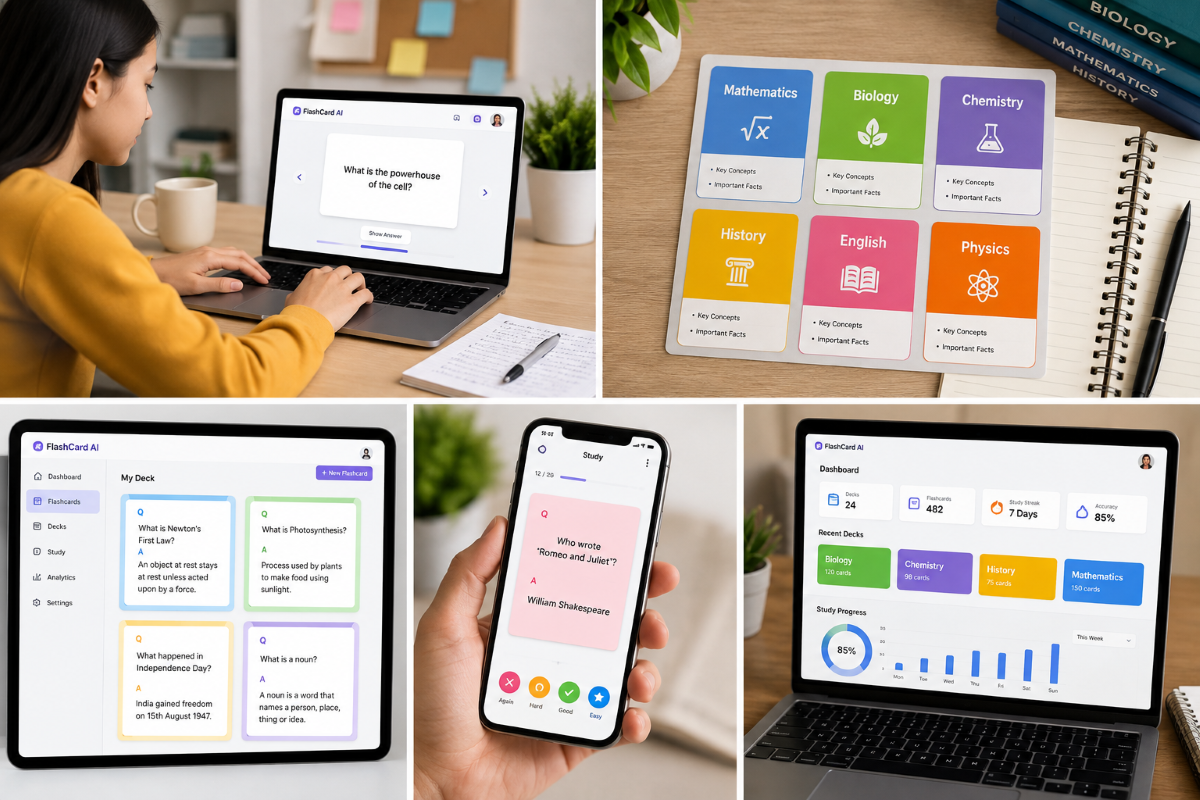
Color flashcards are study cards that use different colors to highlight words, concepts, definitions, pictures, or important information. Colors can help learners organize content and quickly recognize different categories. When combined with effective study methods, colorful cards can make revision more interesting and easier to manage.
What Are Color Flashcards?
Color flashcards are cards that use different colors as part of their design or organization. A traditional flashcard may contain a question on one side and an answer on the other. Color can be added to make certain information easier to identify.
For example:
- Blue: Definitions
- Green: Examples
- Yellow: Important facts
- Red: Difficult concepts
- Purple: Vocabulary
The exact color system is up to the learner. The important thing is to use colors consistently.
Color flashcards can be physical cards made from paper or digital cards created with online learning tools.
10 Powerful Benefits of Color Flashcards
1. Make Learning More Visual
Visual information can make study materials easier to scan and organize.
Instead of looking at a page filled with plain text, learners can use colors to separate different types of information.
For example, a student studying biology might use:
- Green for plant-related concepts
- Blue for animal biology
- Yellow for important definitions
- Red for difficult terms
This simple visual system can make revision more organized.
2. Improve Information Organization
One of the most useful benefits of color is organization.
Students often study multiple subjects and may have hundreds of facts to remember. Using a consistent color system can help divide information into meaningful categories.
For example, a history student could use:
- Blue for people
- Green for places
- Yellow for dates
- Red for major events
When reviewing the cards, the learner can quickly identify what type of information each card contains.
3. Make Flashcards More Engaging
Studying the same type of plain notes every day can become boring.
Colorful cards can make study materials more visually interesting. A well-designed card can encourage learners to interact with their study material instead of simply reading paragraphs.
However, colors should support learning rather than distract from it.
A good flashcard should remain:
- Clear
- Simple
- Easy to read
- Focused on one main idea
4. Support Active Recall
Flashcards are commonly used for active recall. This means trying to remember an answer before checking it.
For example:
Front: What is the process by which plants make food?
The learner thinks about the answer first.
Back: Photosynthesis.
Color can help organize these questions without changing the basic active-recall process.
Learners can create different color categories for different topics and then test themselves regularly.
5. Help Highlight Important Information
Not every piece of information has the same level of importance.
Color can help students identify information that deserves additional attention.
For example:
- Normal color = information that is understood
- Yellow = information that needs review
- Red = information that is difficult
- Green = information that has been mastered
This system can help learners quickly identify areas that require more practice.
6. Useful for Language Learning
Color flashcards can be particularly useful when learning a new language.
Students can assign colors to different language categories.
For example:
Vocabulary
Use one color for new words.
Grammar
Use another color for grammar rules.
Verbs
Use another color for common verbs.
Phrases
Use another color for everyday expressions.
A learner studying English vocabulary could create cards such as:
Front: Beautiful
Back: Attractive or pleasing to look at.
A consistent color system can help separate vocabulary from grammar and other learning material.
7. Make Study Sessions Easier to Navigate
Large study decks can sometimes feel overwhelming.
Color coding can make navigation easier because learners can quickly recognize different categories.
For example, a student preparing for a science examination could organize cards into:
- Chemistry
- Biology
- Physics
- Definitions
- Formulas
Each category can have its own color.
This makes the study deck easier to scan and can reduce the time spent searching for specific information.
8. Work Well for Different Learning Activities
Color flashcards are flexible and can be used for many learning activities.
Students can use them for:
- Vocabulary practice
- Definitions
- Formulas
- Dates
- Names
- Concepts
- Questions and answers
- Revision
- Exam preparation
Teachers can also use colorful cards to introduce concepts in classrooms or create activities for students.
9. Can Be Used With Digital Flashcards
Color coding is not limited to physical cards.
Digital flashcards can also use different colors, backgrounds, icons, or visual elements to organize study information.
Students can create digital decks for different subjects and apply consistent colors to each category.
FlashCard AI can fit into this digital learning approach by helping learners work with organized flashcard-based study materials.
The goal should always be to create cards that are useful and easy to review.
10. Encourage Consistent Study Habits
The effectiveness of flashcards depends heavily on regular practice.
Colorful cards can make it easier to organize a daily or weekly study routine.
For example, a learner could follow this simple plan:
- Monday: Review new cards
- Tuesday: Practice difficult cards
- Wednesday: Review previous topics
- Thursday: Add new cards
- Friday: Test memory
- Weekend: Complete a larger revision session
A consistent routine can make studying more manageable.
How to Create Effective Color Flashcards
Creating colorful cards does not mean adding as many colors as possible. Too many colors can make cards confusing.
Follow these simple tips:
Choose a Simple Color System
Start with three to five colors.
Use Colors Consistently
Give each color a clear purpose.
Keep Text Easy to Read
Choose colors that provide good contrast.
Focus on One Idea
Avoid putting too much information on a single card.
Use Color for Meaning
Do not add colors only for decoration. Give each color a useful purpose.
Review Your Cards
Make sure the cards are clear and accurate before using them for revision.
Frequently Asked Questions
What are color flashcards?
Color flashcards are study cards that use different colors to organize, highlight, or categorize information.
Are color flashcards useful for studying?
Yes. They can make study materials more visual and organized while supporting flashcard-based revision and active recall.
How many colors should I use?
There is no fixed number, but using around three to five colors can keep the system simple and easy to understand.
Can I create digital color flashcards?
Yes. Digital flashcard platforms can allow learners to organize study cards using colors and other visual elements.
How should I choose colors for flashcards?
Give each color a specific purpose. For example, one color can represent definitions, another important facts, and another difficult concepts.
Can color flashcards help with memorization?
They can support organized revision and active recall. However, regular practice and understanding the material are still important.
What is FlashCard AI?
FlashCard AI is a digital learning brand that supports flashcard-based study and can be part of an organized online learning workflow.
Conclusion
Color flashcards offer a simple way to make study materials more visual, organized, and engaging. By assigning different colors to specific categories, learners can quickly identify important information and create a more structured revision system.
They can be useful for vocabulary, definitions, formulas, dates, concepts, and exam preparation. They can also be created as physical cards or used as part of a digital learning system.
FlashCard AI can support a modern digital flashcard workflow where learners organize and review study materials more conveniently. However, technology and colorful designs should support good learning habits rather than replace them.
For the best results, combine color flashcards with active recall, regular revision, clear questions, and accurate study information. When used consistently, they can become a practical tool for making everyday studying more organized and engaging.
For more detail visit:https://sikhona.social/blogs/125289/10-Powerful-Benefits-of-Free-Flashcards-for-Smarter-Studying

 English
 Arabic
 Spanish
 Portuguese
 Deutsch
 Turkish
 Dutch
Dutch
 Italiano
 Russian
 Romaian
 Portuguese (Brazil)
 Greek
Greek